
Core Web Vitals are a set of metrics that measure the speed, responsiveness, and visual stability of a webpage. In simple terms, they tell Google (and your users) how smooth and reliable your site feels.
They’re part of Google’s page experience signals—ranking factors that evaluate overall user experience (UX). That means improving Core Web Vitals can boost both your rankings and your visitors’ satisfaction.
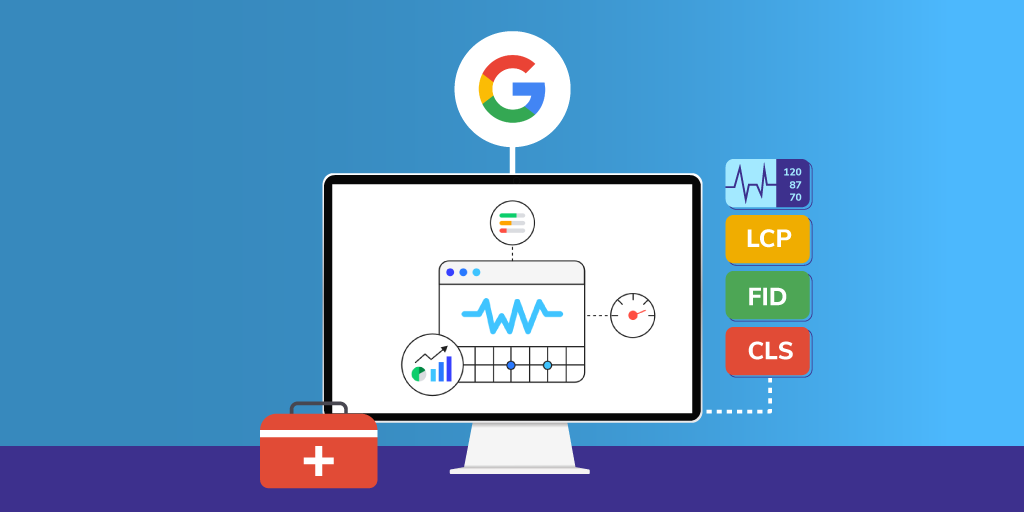
The three Core Web Vitals are:
- Largest Contentful Paint (LCP): How long it takes for the largest element on your page to fully load (should be under 2.5 seconds).
- Interaction to Next Paint (INP): How fast your site responds when a user clicks, taps, or types (aim for 200 ms or less).
- Cumulative Layout Shift (CLS): How stable your page layout is as it loads (keep it below 0.1 to avoid unexpected shifts).
How to Check Core Web Vitals
You can monitor your Core Web Vitals in several ways:
- Google Search Console (Experience tab): Shows site-wide performance and highlights problem URLs.
- PageSpeed Insights: Analyzes single pages with detailed recommendations.
- Semrush Site Audit: Offers both Core Web Vitals insights and a full technical SEO scan.
👉 With a free Semrush account, you can audit up to 100 URLs, or try their Pro subscription for deeper analysis.
Why Core Web Vitals Are Important
Great user experience = better SEO potential.
Google wants to reward sites that load fast, respond quickly, and feel smooth to use. That’s why Core Web Vitals are bundled with other page experience signals, such as:
- HTTPS security
- Mobile-friendliness
- Safe browsing (no malware or deceptive practices)
- No intrusive popups
⚠️ Note: Having strong Core Web Vitals won’t automatically push you to position #1. Google uses hundreds of ranking factors. But weak performance can hold you back—even with great content.
ALSO READ: Building an SEO Strategy from Scratch: A 90-Day Plan
Breaking Down the Core Web Vitals
1. Largest Contentful Paint (LCP)
What it measures: The time it takes for the main element on the page (like a hero image or text block) to fully load.
✅ Good LCP: under 2.5 seconds
⚠️ Needs improvement: 2.5–4 seconds
❌ Poor: 4+ seconds
Tips to improve LCP:
- Remove unnecessary third-party scripts (each one adds ~34 ms delay).
- Upgrade hosting for faster overall performance.
- Avoid lazy loading images above the fold.
- Compress or remove large, unnecessary elements.
- Minify CSS to prevent rendering delays.
2. Interaction to Next Paint (INP)
What it measures: How quickly your site reacts after a user clicks, taps, or types.
✅ Good INP: under 200 ms
⚠️ Needs improvement: 200–500 ms
❌ Poor: 500+ ms
This metric replaced First Input Delay (FID) in 2024, giving a more accurate view of page responsiveness.
Why it matters:
- For content-heavy pages (like blogs), INP isn’t as critical.
- For interactive pages (logins, checkout, forms), fast INP is essential.
Tips to improve INP:
- Minimize or defer JavaScript to avoid blocking user actions.
- Remove non-essential third-party scripts.
- Defer code execution and break long browser tasks into smaller chunks.
3. Cumulative Layout Shift (CLS)
What it measures: The stability of your page layout as it loads.
✅ Good CLS: below 0.1
⚠️ Needs improvement: 0.1–0.25
❌ Poor: 0.25+
Why it matters: Pages that shift while loading frustrate users and cause accidental clicks (think banners pushing buttons around).
Tips to reduce CLS:
- Set fixed dimensions for images and videos.
- Reserve space for ads so they don’t push content.
- Avoid inserting new content above the fold after load (like banners).
Final Thoughts
Core Web Vitals are not just technical SEO metrics—they’re user experience signals.
Improving them helps you:
- Deliver a faster, smoother site
- Keep users engaged
- Strengthen your SEO foundation
But remember: content quality still matters most. Core Web Vitals should complement great content, not replace it.
If you want to dig deeper, explore:
- User behavior & SEO insights
- Complete guides to page speed optimization
- Site audits with tools like Semrush or Google PageSpeed Insights
